






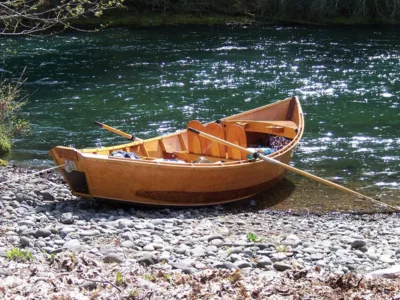
There is something special about sitting in a drift boat before sunrise. The river is quiet, the water moves steadily beneath you, and the only sounds are the oars dipping into the current and the occasional splash of a fish somewhere in the distance. Over the years, I have spent countless days floating rivers in pursuit of steelhead, trout, and other fish. While the fishing has always been part of the draw, I eventually realized that drift boats offer lessons that extend far beyond the water.
The more time I spent navigating rivers, the more I saw similarities between running a drift boat and navigating life itself. The lessons are not complicated, but they are easy to overlook because they unfold slowly through experience.
You Cannot Control the Current
One of the first things every drift boat angler learns is that the river is always moving. No matter how skilled you are, you cannot stop the current or force the river to go where you want it to go. The best you can do is understand what is happening around you and adjust your approach accordingly.
Life works much the same way. Many people spend enormous amounts of energy trying to control circumstances that are completely outside their influence. They worry about the actions of others, obsess over situations they cannot change, and become frustrated when life does not follow the plan they created.
The truth is that life has its own current. Unexpected opportunities appear, challenges arrive without warning, and plans change. The people who navigate these moments successfully are not always the strongest or smartest. They are often the ones who adapt. A drift boat teaches that lesson every day.
Small Adjustments Matter
Running a drift boat is rarely about making dramatic moves. Most of the time, success comes from small corrections: a slight pull on one oar, a subtle change in direction, or a minor adjustment that keeps the boat on the desired path. If you wait too long to make those adjustments, problems grow quickly.
Life follows a similar pattern. Many of our biggest challenges do not appear overnight. Relationships weaken because communication stops, health declines because small habits are ignored, and goals drift away because daily effort disappears.
The opposite is also true. Positive changes often begin with simple actions repeated consistently. Reading a few pages each day, taking a short walk, making one phone call, or spending quality time with family may not seem important in the moment, but over time those actions shape the direction of our lives.
The Best Route Is Not Always the Straightest
People who have never run a river often assume the shortest route is the best route. Experienced boaters know better. The safest line through a stretch of water is not always the most direct one. Rocks, logs, shallow sections, and changing currents can turn a straight path into a dangerous choice. Sometimes the smartest move is to take a longer route.
Life presents similar situations. Many people become focused on reaching goals as quickly as possible. They want immediate success, fast results, and shortcuts. Unfortunately, shortcuts often create new problems.
The longer path may require more patience, but it often provides valuable experience along the way. It teaches lessons that cannot be learned through speed alone. A drift boat rewards patience, and life often does the same.
Conditions Change Constantly
No two days on the river are exactly alike. Water levels rise and fall, weather changes, fish behavior shifts, and a productive spot one week may be completely different the next. Success requires observation.
The anglers who consistently perform well are those who pay attention. They notice subtle details, recognize changing conditions, and adapt their approach instead of relying solely on past experience.
Life constantly changes as well. What worked ten years ago may not work today, skills that were valuable in one season may need adjustment in another, and personal priorities evolve. Growth often depends on our willingness to learn and adapt. The river never stops teaching this lesson.
Trust Matters
A drift boat creates a unique partnership between people. The person on the oars carries significant responsibility, and passengers trust that person to navigate safely through changing water conditions. At the same time, the rower trusts the anglers to communicate clearly and work together when needed.
Without trust, frustration grows quickly. The same principle applies to families, friendships, and professional relationships. Trust creates stability during difficult situations, allows people to work toward common goals, and builds confidence when challenges appear.
Trust takes time to develop, but it can disappear quickly if neglected. The river provides a constant reminder that strong relationships depend on trust.
Not Every Day Ends With Success
Every angler eventually experiences slow fishing days. Sometimes the conditions look perfect and the fish simply do not cooperate. Sometimes you put in maximum effort and come home empty-handed.
Those days can be frustrating, but they also teach valuable lessons. They remind us that effort and outcome are not always connected, reinforce patience, and build resilience.
Life offers similar experiences. There are times when hard work does not immediately produce results, and there are moments when plans fall apart despite careful preparation. Those situations can be disappointing, but they are often where growth occurs. Character develops when things do not go according to plan.
The Journey Matters More Than the Destination
Many anglers begin a trip focused entirely on catching fish. There is nothing wrong with that, but after enough years on the water, priorities begin to shift. The sunrise becomes more meaningful, the conversations become more memorable, the scenery becomes more valuable, and the simple act of spending time outdoors becomes enough.
I think many people experience something similar in life. When we are younger, we often focus on accomplishments. We chase milestones and achievements, set goals, and pursue them relentlessly.
As time passes, we begin to appreciate the journey itself. The people we meet, the experiences we share, and the memories we create often become more important than the destination.
Why I Keep Coming Back
Jesse Vierstra has spent years floating rivers throughout the American West, and every trip reinforces lessons that extend far beyond fishing. The river provides challenges, opportunities, and constant reminders about what truly matters. It rewards patience, observation, adaptability, and humility.
Jesse Vierstra understands that a drift boat is much more than a fishing platform. It is a classroom where nature quietly teaches lessons that apply to everyday life.
Every river tells a different story, but the message remains remarkably consistent. Life, like a drift boat, requires balance, adjustment, and trust. The current will always keep moving, and our job is to learn how to navigate it. For Jesse Vierstra, that lesson is one worth returning for again and again.